One Day in Brussels: The Perfect Brussels 1 Day Itinerary
If you only have one day in Brussels, you can still see many of the city's best attractions, eat Belgian waffles and fries, try Belgian chocolate, and explore one of Europe's most impressive historic centers. Brussels is relatively compact, and many of the top things to do in Brussels are within walking distance of Grand Place.
A good Brussels one day itinerary should focus primarily on the historic city center, where you'll find Grand Place, Manneken Pis, Galeries Royales Saint-Hubert, Belgian chocolate shops, restaurants, cafés, and several museums. From there, you can walk uphill toward Mont des Arts, the Royal Quarter, and Sablon or take the metro to the Atomium if it's high on your Brussels sightseeing list.
This Brussels itinerary covers what to do in Brussels in one day, the best places to visit, Belgian foods to try, how to get around, where to stay, and how to make the most of 24 hours in Brussels, Belgium.
About Brussels: How the City Is Laid Out
Brussels is the capital of Belgium and the country's largest urban area. It's also one of the main political centers of the European Union, but the part of Brussels most tourists visit feels much smaller than you might expect.
For a first visit, it helps to think of central Brussels as having a Lower Town and Upper Town. The Lower Town contains the historic center around Grand Place, Bourse, Saint-Géry, Sainte-Catherine, and many of the city's older commercial streets. This is where you'll find Grand Place, Manneken Pis, Galeries Royales Saint-Hubert, restaurants, Belgian beer bars, waffle shops, and chocolate stores.
From Grand Place, the city rises toward the Upper Town. Around Mont des Arts, the Royal Quarter, and Sablon, you'll find the Royal Palace of Brussels, Brussels Park, Magritte Museum, Royal Museums of Fine Arts, Musical Instruments Museum, and several other cultural attractions.
Farther east is the European Quarter, home to major European Union institutions and Parc du Cinquantenaire. North of the historic center is the Heysel area, where you'll find the Atomium and Mini-Europe. The Atomium is not within the main walking area, so you'll want to use the metro if you're adding it to a one-day Brussels itinerary.
For most first-time visitors with just one day in Brussels, the historic center, Royal Quarter, and Sablon should be your priorities.
Is One Day in Brussels Enough?
One day is enough to see the main highlights of Brussels, particularly if you're visiting as part of a longer Belgium or Europe trip.
You won't see everything Brussels has to offer, but you can comfortably visit Grand Place, Manneken Pis, Galeries Royales Saint-Hubert, Mont des Arts, the Royal Palace area, and Sablon while leaving time for Belgian food and chocolate.
Adding the Atomium is possible, but it will make your day considerably busier because it's outside the city center.
If you have two days in Brussels, you can explore at a slower pace and add museums, the European Quarter, Atomium, Mini-Europe, or neighborhoods outside the historic center.
One Day in Brussels Itinerary
For the most efficient Brussels itinerary, start early in the historic center and spend the morning walking between the major attractions.
After lunch, explore the Upper Town, Royal Quarter, and Sablon.
If you want to see the Atomium, take the metro to Heysel in the afternoon. Otherwise, use that time for museums, shopping, chocolate tasting, or exploring more of central Brussels.
Return to the historic center in the evening for dinner and Belgian beer.
8:00 AM: Start With Breakfast in Brussels
Start your day with coffee, pastries, or a Belgian breakfast near the historic center.
Brussels has plenty of bakeries and cafés, so you don't need to spend too much of your limited sightseeing time on breakfast.
Le Pain Quotidien is one recognizable option with breads, pastries, coffee, and breakfast dishes.
If you'd rather get started immediately, grab a croissant and coffee and head toward Grand Place.
Save the Belgian waffle for later. You'll have plenty of opportunities to find one as you explore the center.
9:00 AM: Visit Grand Place
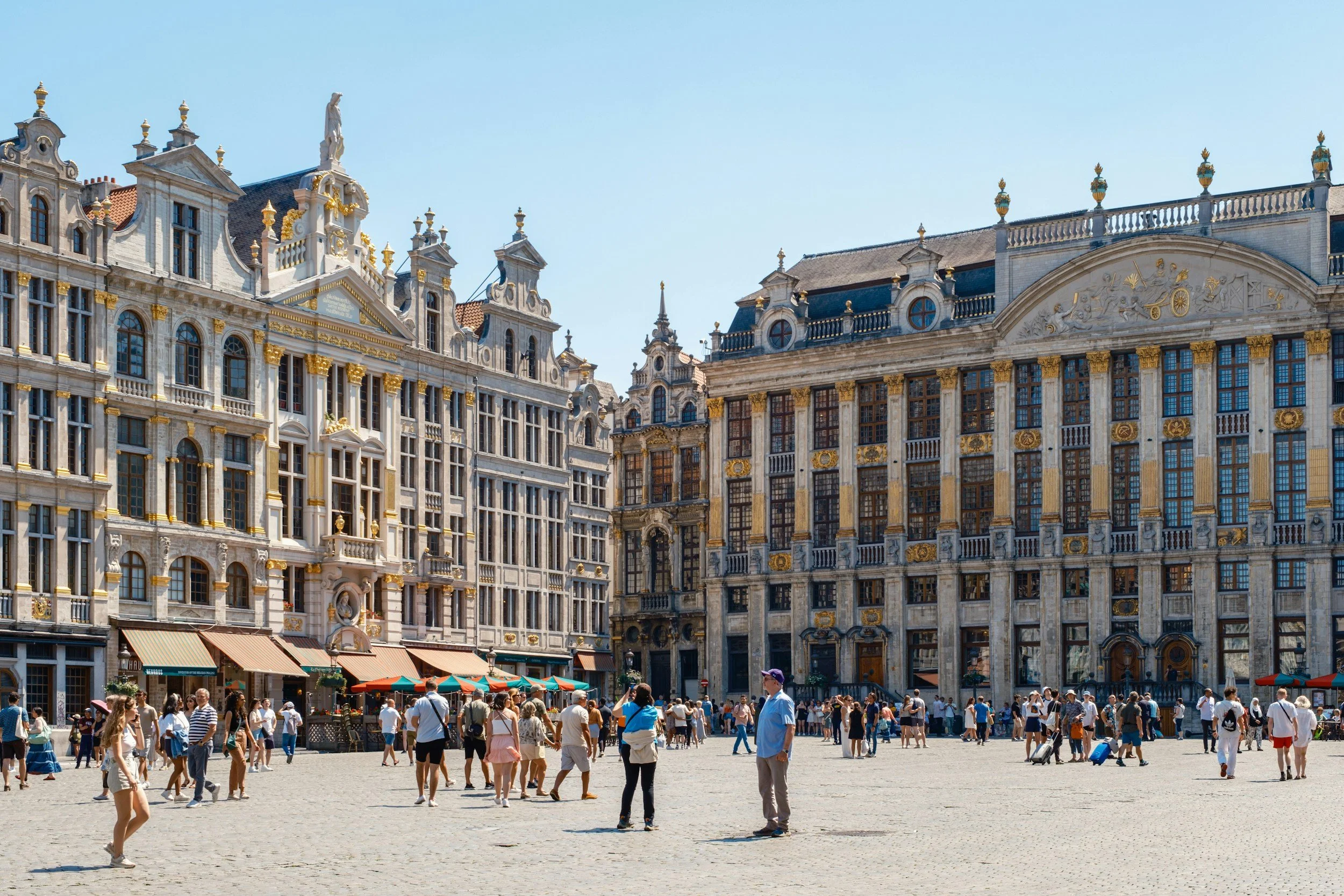
Grand Place should be the first major stop on almost any Brussels itinerary.
Located in the heart of the historic center, Grand Place is surrounded by elaborate guildhalls, the Brussels Town Hall, and the King's House, also known as Maison du Roi or Broodhuis.
The square began as a market area in the Middle Ages and became the economic and political center of Brussels. Much of Grand Place was destroyed during the French bombardment of Brussels in 1695 and subsequently rebuilt. The square has been a UNESCO World Heritage Site since 1998.
Take time to walk around the square and look at the buildings rather than simply stopping for a photo.
Grand Place also hosts events throughout the year, including concerts, holiday displays, cultural celebrations, and the famous Flower Carpet during certain summers.
If you only see one place during your day in Brussels, make it Grand Place.
Visit the Brussels City Museum
If you want more context about Brussels, the Brussels City Museum is located directly on Grand Place inside the King's House.
The museum covers the history, art, architecture, and development of Brussels.
It also houses the original Manneken Pis statue. The statue you see outside in the city is a later version, while the original is protected inside the museum.
For a one-day itinerary, whether you visit the museum depends on your interests and available time. If you're trying to fit the Atomium into the same day, you may want to admire the building from outside and keep moving.
9:45 AM: Walk to Manneken Pis
From Grand Place, it's a short walk to Manneken Pis, one of the most famous landmarks in Brussels.
The small bronze fountain depicts a boy urinating into a basin and has become one of the city's most recognizable symbols.
Don't expect a huge monument. Manneken Pis is surprisingly small, and seeing its size is part of the experience for many first-time visitors.
The statue is regularly dressed in costumes for holidays, international events, organizations, and special occasions.
Brussels even has a separate museum dedicated to the statue's large wardrobe.
You don't need much time here. Take a look, grab a photo, and continue exploring the surrounding streets.
10:00 AM: Try a Belgian Waffle
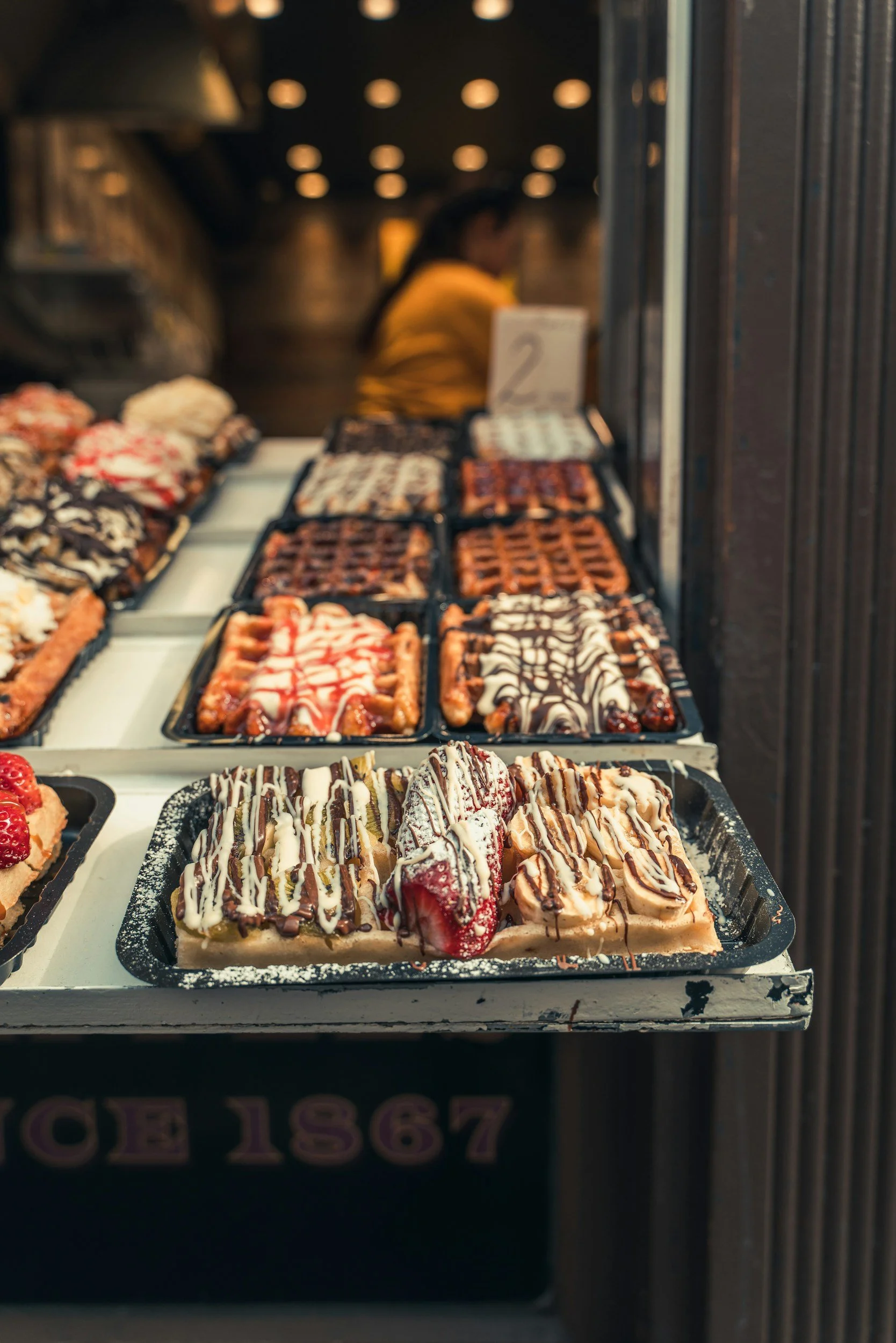
You're in Belgium, so a Belgian waffle should probably make an appearance somewhere in your day.
You'll find waffle shops throughout the streets surrounding Grand Place and Manneken Pis.
Two styles are commonly associated with Belgium. Brussels waffles are generally rectangular and lighter, while Liège waffles are denser and sweeter with caramelized pearl sugar.
You can keep things simple with powdered sugar or add chocolate, fruit, whipped cream, or other toppings.
For a one-day Brussels itinerary, a waffle also makes an easy mid-morning snack without taking time away from sightseeing.
10:30 AM: Walk Through Galeries Royales Saint-Hubert
Next, head to Galeries Royales Saint-Hubert.
This covered shopping arcade is one of the most impressive places to walk through in central Brussels and is just a few minutes from Grand Place.
The galleries are lined with shops, cafés, restaurants, theaters, and Belgian chocolate stores.
Even if you don't plan to shop, it's worth walking through for the architecture.
This is also a convenient place to start shopping for Belgian chocolates.
Buy Belgian Chocolate in Brussels
Belgium is internationally known for chocolate, and Brussels has no shortage of chocolatiers.
You'll find major Belgian brands such as Neuhaus and Godiva as well as smaller chocolate shops throughout the historic center and Sablon.
Pralines are one of the most popular Belgian chocolate specialties.
If you're buying chocolate as a souvenir, consider waiting until later in the day so you don't have to carry it around for hours, particularly during warm weather.
Sablon is another excellent area for chocolate shopping later in this Brussels itinerary.
11:00 AM: Explore Mont des Arts
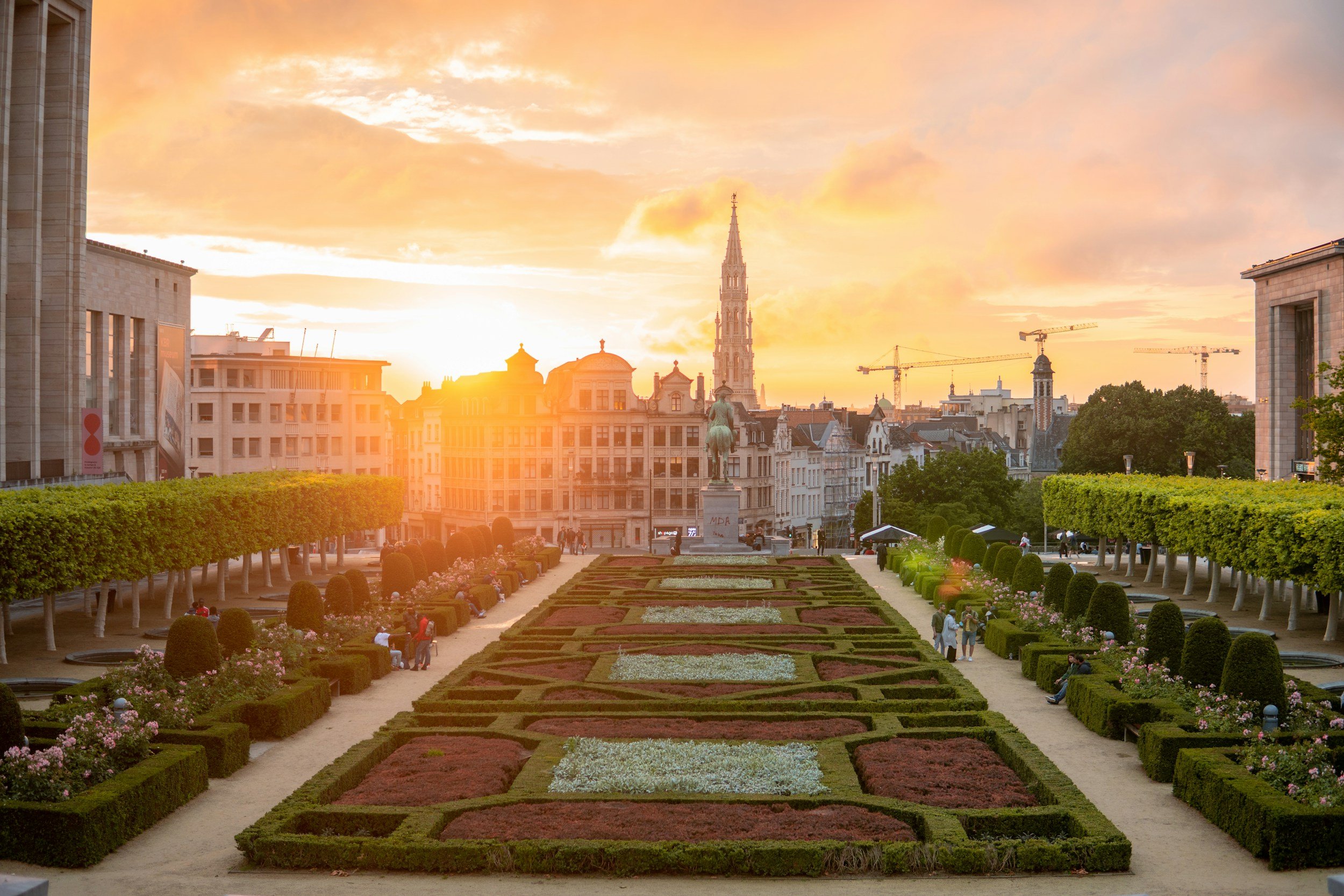
From the historic center, walk uphill toward Mont des Arts.
This area connects the Lower Town with Brussels' museum and Royal Quarter districts.
Mont des Arts is known for its elevated view across central Brussels and its landscaped garden.
It's also surrounded by several important cultural institutions, making it a natural transition between Grand Place and the Upper Town.
Stop for a few photos before continuing toward the museums and Royal Palace.
11:30 AM: Choose a Brussels Museum
If museums are important to you, late morning is a good time to choose one rather than trying to visit several.
The Magritte Museum is dedicated to Belgian surrealist René Magritte and contains a major collection of his work.
The Royal Museums of Fine Arts of Belgium cover centuries of European art, including works associated with Flemish and Belgian artists.
Another option is the Musical Instruments Museum, which has a large collection of instruments inside an Art Nouveau building.
With only one day in Brussels, choose the museum that interests you most and give yourself a specific amount of time.
If museums aren't a priority, skip this stop and spend more time exploring the city on foot.
12:30 PM: See the Royal Palace of Brussels
Continue to the Royal Palace of Brussels.
The Royal Palace is the official palace of the Belgian monarchy, although it isn't the royal family's primary residence.
Even when the interior isn't open, the exterior and surrounding Royal Quarter are worth seeing.
Across from the palace is Brussels Park, also known as Parc de Bruxelles or Warandepark.
The park provides a convenient break from the surrounding streets and connects the palace area with other parts of central Brussels.
Interior access to the Royal Palace is seasonal, so check current opening information if going inside is important to you.
1:00 PM: Lunch in Brussels
By this point, it's time for Belgian food.
Moules-frites, or mussels with fries, is one of the classic dishes associated with Belgium.
Belgian fries are another essential food to try. For something quick, look for a fritkot or fries stand and order fries with one of the many available sauces.
Other Belgian dishes you'll encounter include carbonnade flamande, a beef stew commonly prepared with Belgian beer, and croquettes filled with cheese or shrimp.
If you want a sit-down lunch, the historic center, Sainte-Catherine, Saint-Géry, and Sablon all have plenty of restaurants.
Don't over-plan every meal. Brussels is full of cafés, brasseries, fry shops, and restaurants, and part of the fun is finding somewhere as you explore.
2:00 PM: Explore Sablon
After lunch, head toward Sablon.
The neighborhood is known for chocolate shops, antique dealers, art galleries, cafés, and attractive streets.
Grand Sablon is the main square, while nearby Petit Sablon has a landscaped garden.
This is one of the best areas in Brussels to shop for higher-end Belgian chocolates.
It's also a good place to slow down for coffee if you've been walking since early morning.
From here, you have a choice: continue exploring central Brussels or head north to the Atomium.
Option 1: Spend the Afternoon in Central Brussels
If this is your first trip to Brussels and you prefer a relaxed day, staying in the center is the easiest option.
You can visit another museum, explore the Marolles neighborhood, shop around Sablon, walk toward Sainte-Catherine, or simply spend more time around Grand Place.
The Marolles is known for its flea market at Place du Jeu de Balle, antique shops, and more local atmosphere.
Sainte-Catherine is another good choice, particularly if you're interested in restaurants and the former harbor area.
Brussels' historic center has enough to fill an entire day without ever using public transportation.
Option 2: Visit the Atomium
If the Atomium is on your Brussels bucket list, this is the time to head there.
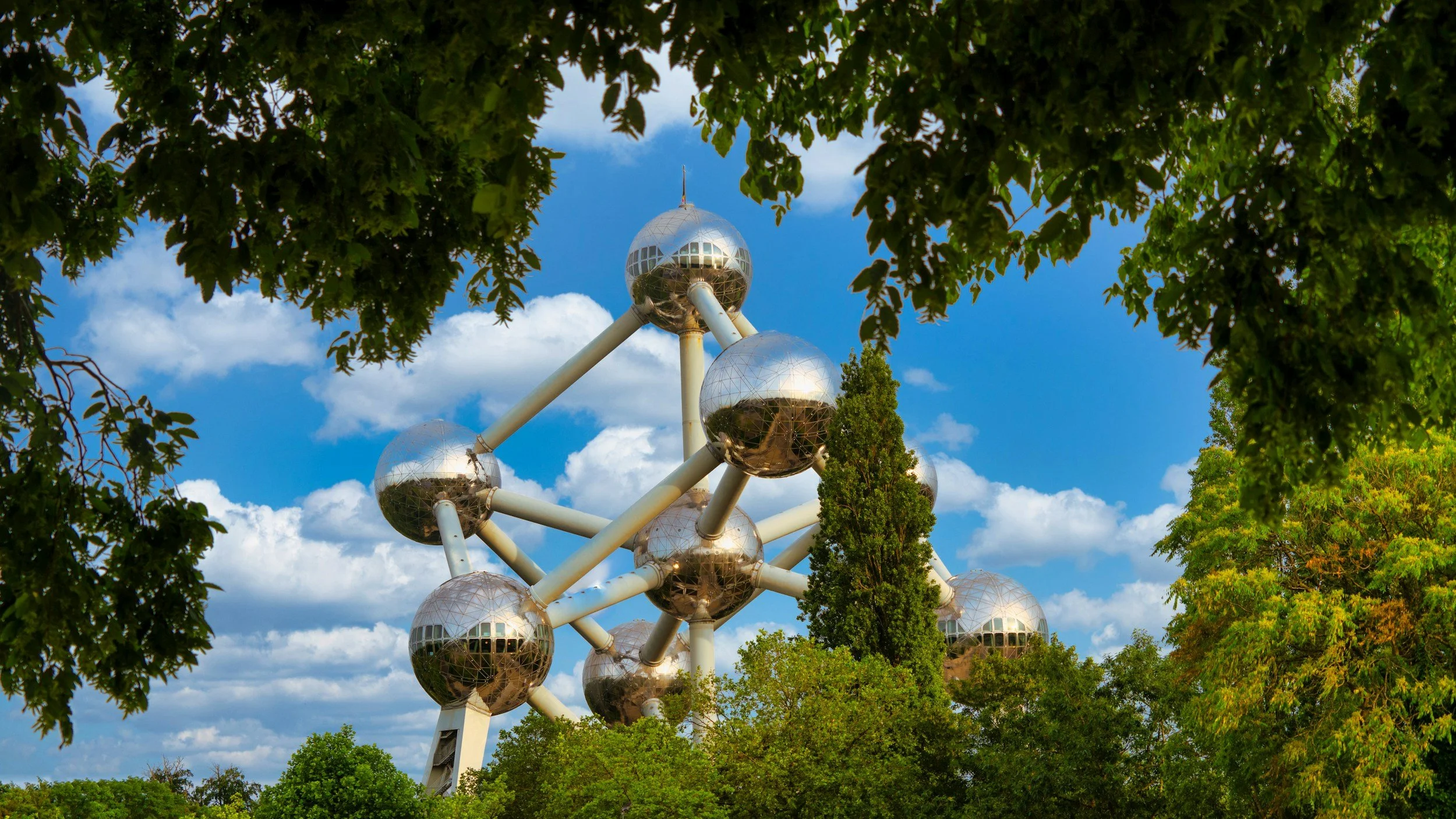
The Atomium was constructed for the 1958 Brussels World's Fair and represents an iron crystal unit cell enlarged 165 billion times. It has since become one of the most recognizable landmarks in Brussels.
The structure contains interconnected spheres with exhibitions and interior spaces, while the upper sphere provides panoramic views across Brussels.
The Atomium is located in Heysel, north of central Brussels.
From the city center, take the metro rather than walking. Official Brussels tourism itineraries estimate the metro ride from central Brussels to the Atomium at about 20 minutes.
Allow roughly two to three hours for the round trip, including transportation and your visit.
Visit Mini-Europe
Mini-Europe is located next to the Atomium, making the two attractions easy to combine.
The park contains miniature versions of landmarks from across Europe, along with interactive displays.
It's particularly popular with families, but it can also be interesting if you enjoy architecture or European travel.
If you only have one day in Brussels, visiting both the Atomium and Mini-Europe will take up a significant portion of the afternoon.
Choose one if you'd rather have more time in central Brussels.
Parc du Cinquantenaire
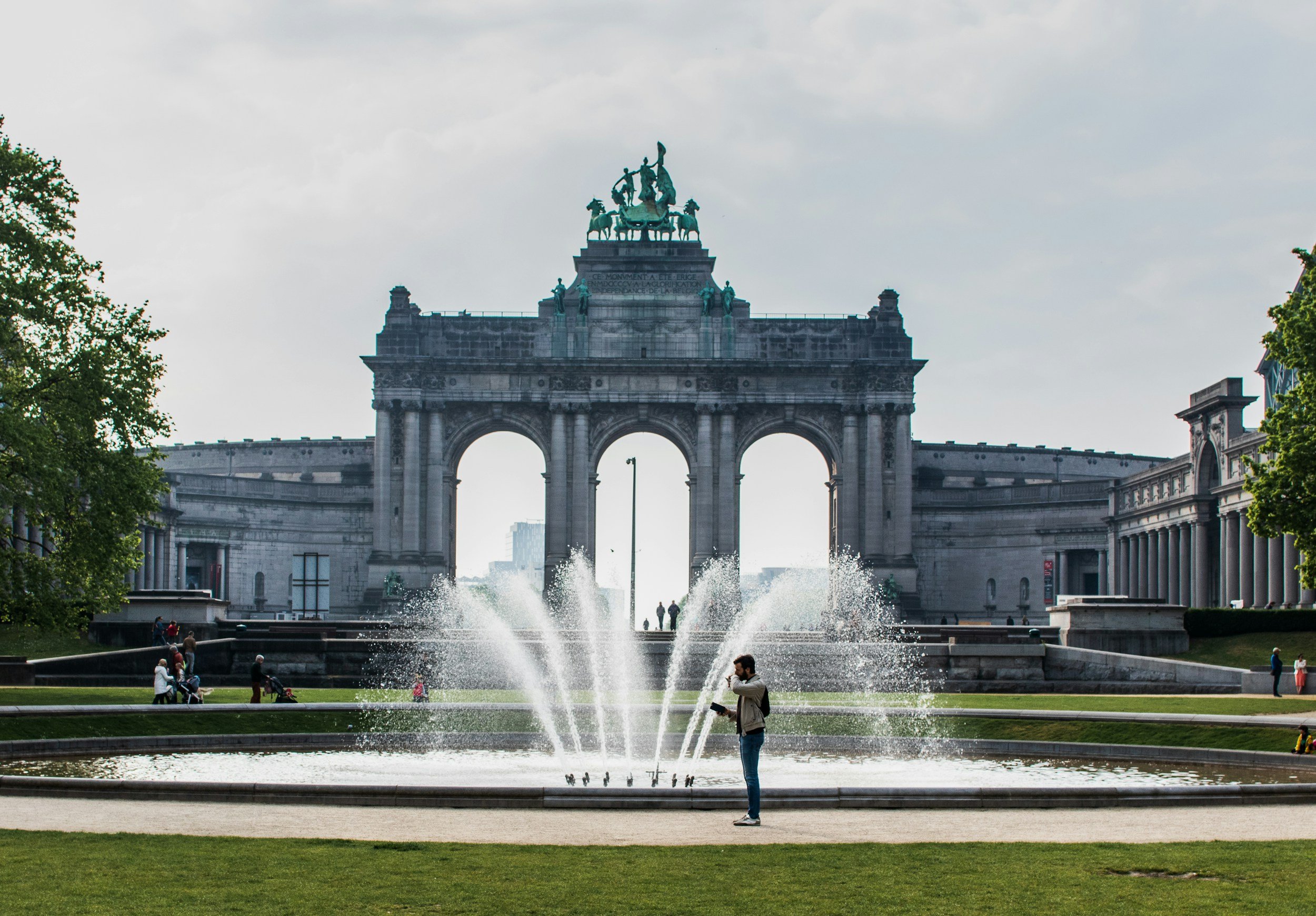
Another option for your afternoon is Parc du Cinquantenaire.
The large park is located east of the historic center near Brussels' European Quarter and is recognizable by its monumental triumphal arch.
The surrounding complex includes museums and large green spaces.
It's a good addition if you're interested in seeing the European Quarter or want a break from the busy historic center.
However, with just one day in Brussels, I'd prioritize Grand Place, the historic center, Royal Quarter, and Sablon before adding Cinquantenaire.
Explore the European Quarter
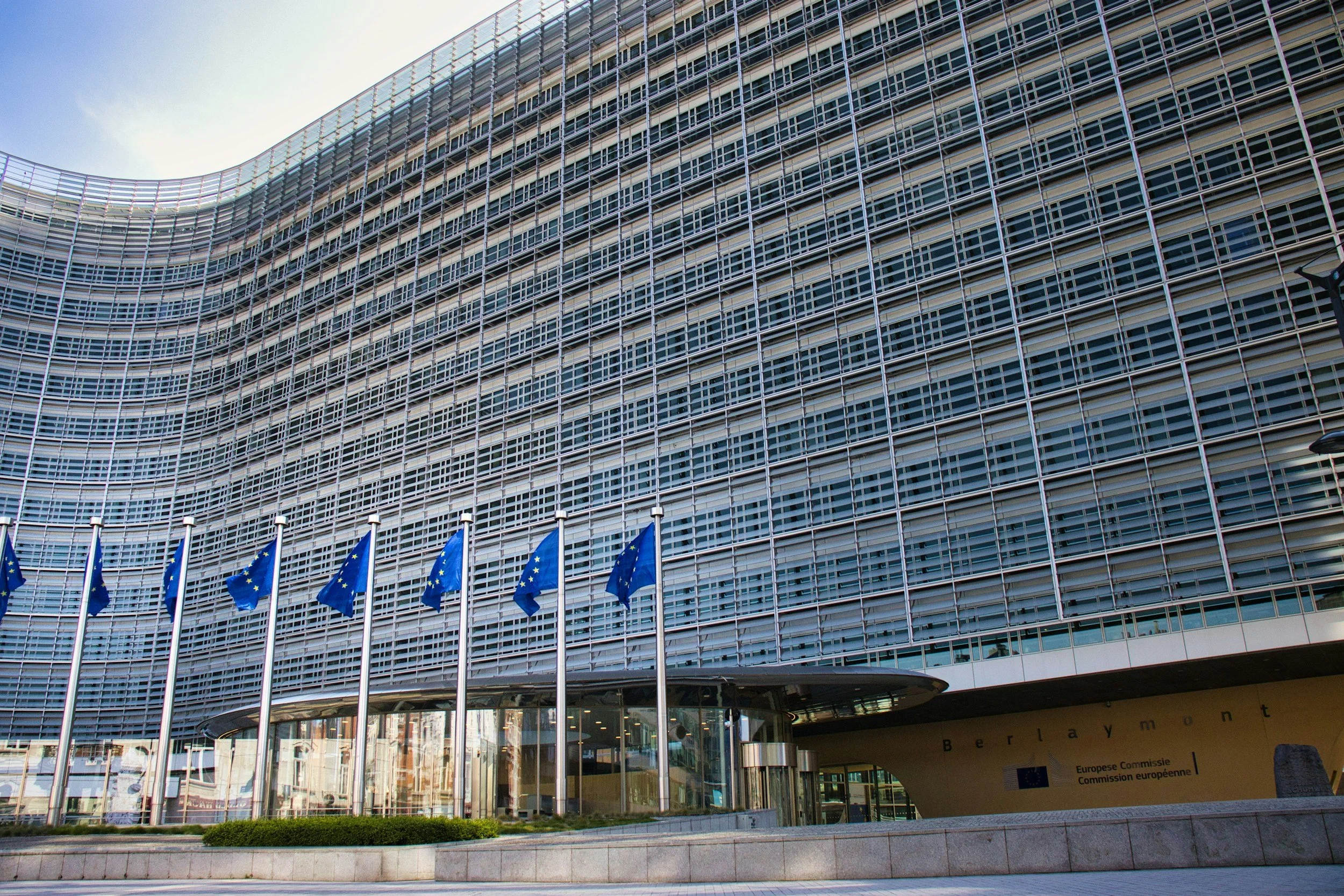
Brussels is widely known as a center of European politics, and the European Quarter is home to institutions of the European Union.
The neighborhood is east of the historic center around areas such as Schuman, Leopold Park, and Place du Luxembourg.
It feels noticeably different from the medieval streets surrounding Grand Place.
If European politics and institutions interest you, you could substitute the European Quarter for the Atomium during your afternoon.
Otherwise, it's easier to save it for a second day in Brussels.
5:00 PM: Return to Grand Place
Whether you spend the afternoon in central Brussels or travel to the Atomium, return to Grand Place before dinner.
The square is worth seeing at different times of day, particularly as daylight begins to fade and the buildings are illuminated.
Take some time to wander without a strict itinerary.
Explore the side streets, stop for chocolate, browse shops, or find a café for a Belgian beer.
This is also a good time to walk through the nearby Bourse area and the pedestrian streets around central Brussels.
Belgian Beer in Brussels
Belgium has one of the world's most recognized beer cultures, and Brussels is a good place to try different Belgian beer styles.
You'll find Trappist beers, lambics, gueuze, saisons, dubbels, tripels, wheat beers, and many other styles on menus throughout the city.
Delirium Café is one of the best-known beer bars in central Brussels and is famous for its very large beer selection.
You don't necessarily need to seek out a famous bar, though. Many traditional Brussels cafés offer extensive Belgian beer menus.
If you aren't familiar with Belgian beers, ask for a recommendation based on the styles you normally enjoy.
7:00 PM: Dinner in Brussels

Finish your one day in Brussels with a Belgian dinner.
Chez Léon is one of the best-known restaurants in the historic center for Belgian dishes, particularly mussels and fries.
You can also head toward Sainte-Catherine for seafood or Sablon for restaurants and bistros.
If you didn't have moules-frites for lunch, dinner is a good opportunity.
Other options include Belgian beef stew, shrimp croquettes, vol-au-vent, or another local specialty.
And if you somehow made it through the entire day without a waffle, now is your chance.
Brussels Nightlife
If you're staying overnight, Brussels has plenty to do after dinner.
The historic center has Belgian beer bars, pubs, cocktail bars, and live music venues.
Ancienne Belgique is one of the city's best-known concert venues and hosts Belgian and international performers.
The Music Village is an option for jazz.
For clubs and electronic music, Brussels also has a substantial nightlife scene.
If you've been sightseeing since early morning, simply having a Belgian beer near Grand Place can be an equally good way to finish the day.
Best Things to Do in Brussels in One Day
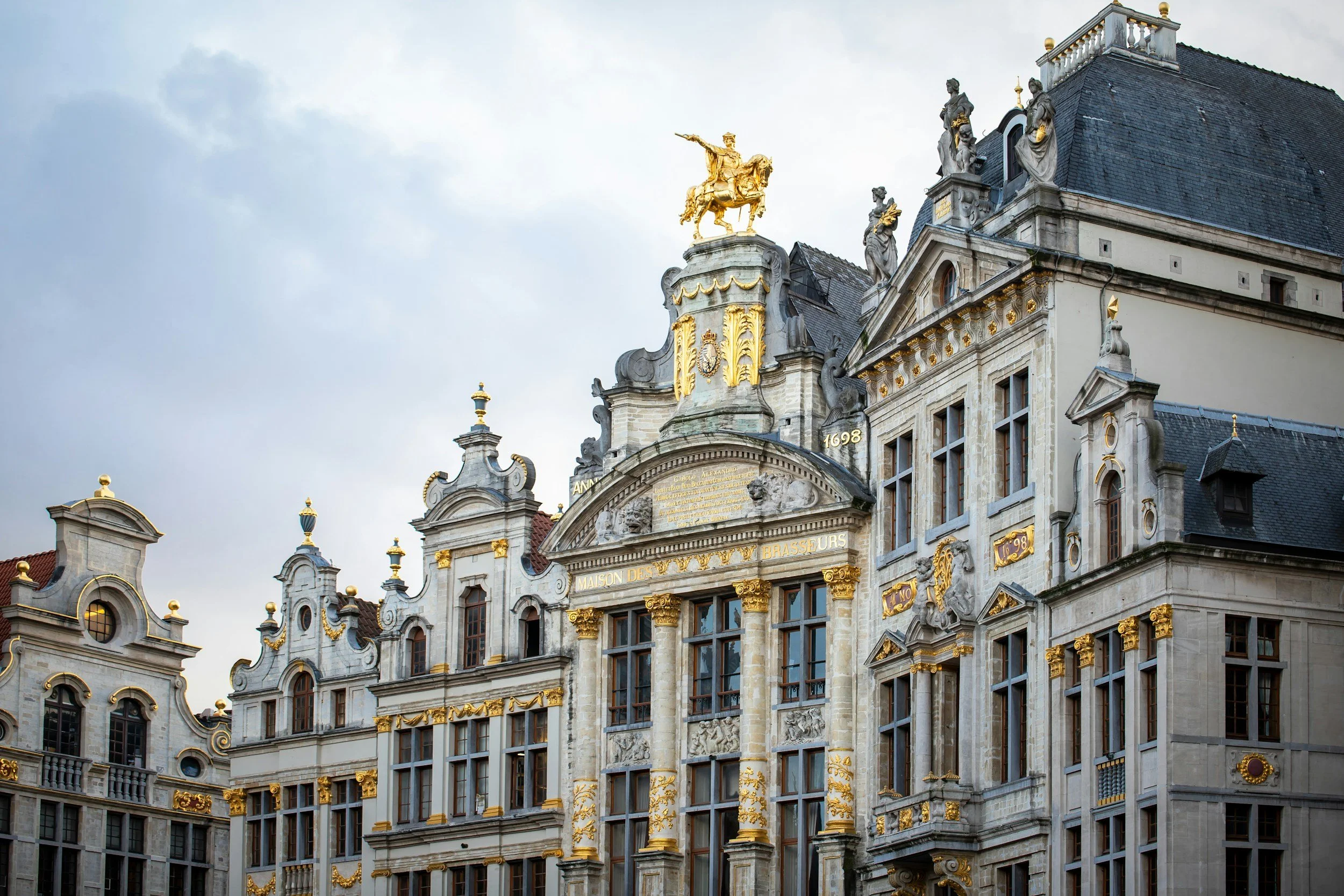
If you're trying to decide what is actually worth prioritizing, focus on Grand Place, Manneken Pis, Galeries Royales Saint-Hubert, Mont des Arts, the Royal Palace area, Belgian chocolate, Belgian waffles, fries, and Sablon.
Those attractions create a relatively logical walking route through central Brussels.
Add the Atomium if seeing it is important to you, but remember that you'll lose some time traveling between the city center and Heysel.
For most first-time visitors, I wouldn't try to combine every museum, Atomium, Mini-Europe, Cinquantenaire, the European Quarter, and the entire historic center into a single day.
A good one-day Brussels itinerary should still give you enough time to enjoy the city.
How to Get to Brussels
Brussels is well connected to other cities in Belgium and across Europe.
Brussels Airport is the city's primary international airport and is connected with central Brussels by train.
If you're arriving from another European city, high-speed trains make Brussels particularly easy to add to a larger Europe itinerary.
Direct international rail connections link Brussels with cities including Paris, Amsterdam, London, Cologne, and other destinations.
Brussels is therefore an easy city to visit for a weekend or add between other major European stops.
Arriving at Brussels Central Station
Brussels Central is the most convenient railway station for most tourists spending one day in Brussels.
The station is just a short walk from Grand Place, Mont des Arts, and Galeries Royales Saint-Hubert.
If you're taking a day trip to Brussels by train from another Belgian city, Brussels Central is generally the most useful station for starting this itinerary.
Don't confuse it with Brussels-Midi/Brussels-South, where many international high-speed trains arrive.
If your train arrives at Brussels-Midi, you can take a local train, tram, metro, or other transportation into the historic center.
Getting Around Brussels
Walking is the best way to explore the historic center.
Grand Place, Manneken Pis, Galeries Royales Saint-Hubert, Mont des Arts, the Royal Quarter, and Sablon are all close enough to combine on foot.
Brussels also has an extensive public transportation network operated by STIB/MIVB, including metro, tram, and bus services.
You'll mainly need public transportation if you're visiting places outside the center, such as the Atomium.
If you're making several transit trips, compare individual fares with available day-ticket options.
Best Time to Visit Brussels
Brussels is a year-round destination.
Spring, particularly April through June, is a good time for mild temperatures and longer days.
September and October can also provide comfortable sightseeing weather with fewer summer tourists.
July and August are popular travel months and can bring larger crowds.
December is a particularly popular time for travelers interested in Christmas markets, holiday lights, seasonal food, and winter events.
Rain is possible throughout the year, so packing a light rain jacket is useful regardless of the season.
Where to Stay in Brussels
For first-time visitors, the historic center is one of the most convenient places to stay in Brussels.
Staying near Grand Place puts restaurants, bars, shops, and many of the city's main attractions within walking distance.
Sablon is another excellent option if you want to stay close to the center but slightly removed from the busiest streets.
Ixelles has more of a neighborhood feel, with restaurants, cafés, shopping, and residential streets.
The European Quarter can be convenient for business travelers or visitors interested in EU institutions.
If you have an early train, consider staying near Brussels Central or Brussels-Midi depending on your departure station.
Shopping in Brussels
Chocolate is probably the most obvious souvenir to buy in Brussels.
Major Belgian chocolate brands have shops throughout the city, but you'll also find smaller chocolatiers offering pralines, truffles, and other specialties.
Belgian beer, comic books, lace, and Manneken Pis souvenirs are also widely available.
For antiques and vintage items, head to the Marolles Flea Market at Place du Jeu de Balle.
Sablon is known for antique shops, galleries, chocolate stores, and boutiques.
Galeries Royales Saint-Hubert is another easy shopping stop because it's already part of the main sightseeing route.
Belgian Food to Try in Brussels
Belgian food should be part of any Brussels itinerary.
Start with fries, ideally from a traditional fritkot.
Moules-frites combines mussels with Belgian fries and is one of the country's best-known dishes.
Belgian waffles are another essential, whether you choose the lighter Brussels style or sweeter Liège style.
Belgian chocolate is easy to find throughout the historic center.
If you want something more substantial, look for carbonnade flamande, a beef stew cooked with beer, or Belgian croquettes.
Pair dinner with a Belgian beer if you drink alcohol.
Is Brussels Walkable?
Yes. Brussels is very walkable for tourists, particularly in the historic center.
Many of the top Brussels attractions are clustered within a relatively small area. The city's official tourism itineraries similarly group Grand Place, Manneken Pis, Galeries Royales Saint-Hubert, Sablon, and the Royal Quarter into walking routes through central Brussels.
There are some hills between the Lower Town and Upper Town, particularly around Mont des Arts and the Royal Quarter, but the distances aren't particularly long.
The major exception is the Atomium. Use the metro rather than trying to walk there from Grand Place.
Is Brussels Worth Visiting?
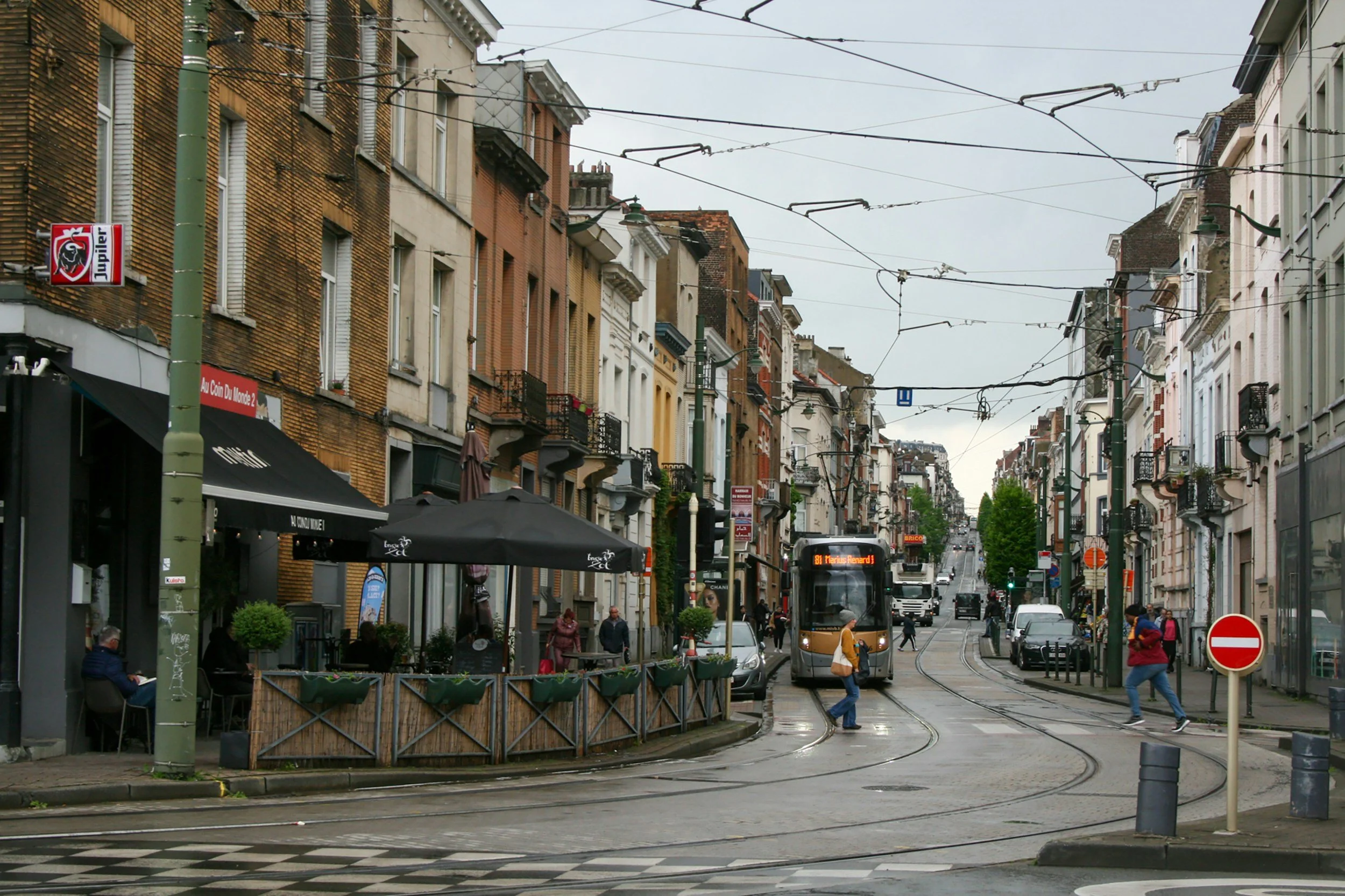
Yes. Brussels is worth visiting, particularly if you enjoy architecture, European history, food, chocolate, beer, museums, and walkable city centers.
The city sometimes gets treated primarily as a transportation stop between Paris, Amsterdam, London, and other European destinations, but Brussels has enough attractions to justify at least a full day.
Grand Place alone is one of the most impressive historic squares in Europe, and the surrounding center makes it easy to combine sightseeing with Belgian food and drinks.
Brussels also works particularly well as part of a larger Belgium itinerary because of its rail connections with Bruges, Ghent, Antwerp, and other cities.
Day Trips From Brussels
If you have more than one day in Belgium, Brussels makes a convenient base for day trips.
Bruges is one of the most popular options, known for canals, medieval architecture, Markt square, and the Belfry of Bruges.
Ghent is another easy trip, with attractions including Gravensteen Castle, St. Bavo's Cathedral, canals, and a large historic center.
Both cities are accessible by train from Brussels.
Another option is Waterloo, south of Brussels, where Napoleon was defeated in 1815.
At the Waterloo Battlefield, visitors can explore the memorial area, museum exhibits, and Lion's Mound.
If you only have one day total in Belgium, though, I wouldn't try to combine Brussels, Bruges, and Ghent. Choose one city and give yourself enough time to actually experience it.
Frequently Asked Questions About One Day in Brussels
Can You See Brussels in One Day?
Yes. One day is enough to see many of the major attractions in central Brussels.
Focus on Grand Place, Manneken Pis, Galeries Royales Saint-Hubert, Mont des Arts, the Royal Palace, Sablon, and Belgian food.
What Should I Not Miss in Brussels?
Grand Place is the top attraction to prioritize.
Other must-see Brussels attractions include Manneken Pis, Galeries Royales Saint-Hubert, Mont des Arts, and the Royal Quarter.
If you have additional time, consider the Atomium, Magritte Museum, or another Brussels museum.
Is Brussels Easy to Walk Around?
Yes. Most attractions in central Brussels are within walking distance of one another.
You can spend most of a one-day itinerary on foot and only use public transportation if you're traveling to the Atomium or another neighborhood outside the center.
Is Grand Place Free to Visit?
Yes. Grand Place is a public square and can be visited without an admission fee.
Individual museums and attractions surrounding the square may charge admission.
How Far Is Grand Place From Brussels Central Station?
Grand Place is only a short walk from Brussels Central Station, making the station particularly convenient for day-trippers.
You can begin sightseeing almost immediately after arriving.
Should I Visit the Atomium With Only One Day in Brussels?
Visit the Atomium if it's one of the attractions you're most interested in seeing.
However, because it's outside the historic center, you'll need to allow time for the metro ride and the attraction itself.
If your priority is historic Brussels, food, museums, and architecture, you can easily spend your entire day in the center instead.
Is Brussels or Bruges Better for a Day Trip?
The two cities offer very different experiences.
Brussels is a larger capital with Grand Place, museums, Belgian food, nightlife, the Royal Quarter, and the Atomium.
Bruges is smaller and known primarily for its medieval historic center, canals, architecture, and compact layout.
If possible, visit both on separate days rather than trying to rush through both.
What Food Is Brussels Famous For?
Brussels and Belgium are known for waffles, chocolate, fries, mussels, beer, and dishes such as carbonnade flamande.
You'll find all of these easily around the historic center.
How Many Days Do You Need in Brussels?
One full day is enough for the major highlights.
Two days gives you time to add museums, Atomium, Mini-Europe, the European Quarter, and neighborhoods outside the historic center without rushing.
Three days provides time to explore Brussels more slowly or take a day trip to another Belgian city.
One Day in Brussels: Final Itinerary
If you want to keep your Brussels one day itinerary simple, start at Grand Place early in the morning and walk to Manneken Pis. Grab a Belgian waffle before heading through Galeries Royales Saint-Hubert and then walk uphill through Mont des Arts toward the Royal Quarter.
Choose one museum if you're interested in art or history, see the Royal Palace, and stop for a Belgian lunch. Spend the early afternoon exploring Sablon and shopping for Belgian chocolate.
From there, either stay in central Brussels and explore neighborhoods such as Marolles and Sainte-Catherine or take the metro to the Atomium.
Return to Grand Place in the evening, find somewhere for Belgian beer and dinner, and enjoy the historic center after dark.
It's a full day, but Brussels is compact enough that you can experience a surprising amount without spending the entire trip rushing between attractions. That's what makes Brussels one of the easiest European capitals to explore when you only have 24 hours.