How to Plan a Trip: Step-by-Step Travel Planning Guide
Planning a trip can feel like a lot at first. Between choosing a destination, finding flights, booking hotels, creating an itinerary, setting a travel budget, researching transportation, and figuring out what to pack, there are dozens of decisions to make before you leave home.
The easiest way to plan a vacation is to break the process into smaller steps. Start with the big decisions, like where you want to go, when you can travel, and how much you want to spend. Once those pieces are in place, you can start booking transportation and accommodations before filling in your daily travel itinerary.
Whether you're planning an international vacation, family trip, honeymoon, cruise, road trip, Disney vacation, or weekend getaway, this step-by-step travel planning guide will help you organize everything from your first idea to your final packing list.
How to Plan a Trip Step by Step

A good trip planning process generally follows this order:
Decide where you want to go.
Choose your travel dates.
Set your travel budget.
Research flights or transportation.
Decide how long you need at your destination.
Choose where to stay.
Research the best things to do.
Create a basic travel itinerary.
Book important attractions and activities.
Plan transportation at your destination.
Consider travel insurance.
Check passports, visas, and entry requirements.
Create your packing list.
Organize all reservations and travel documents.
Leave some free time in your itinerary.
You don't have to plan every detail at once. Work through your vacation planning checklist one step at a time, and the trip will start coming together much more easily.
Step 1: Choose Your Travel Destination
The first step in planning a trip is deciding where you want to go.
Sometimes this is easy. You may already know that you want to visit Italy, take a Caribbean cruise, go to Disney World, or spend a week at the beach. Other times, you may know you want to travel but have no idea where to go.
Start by thinking about what you actually want from the trip. Do you want beaches and warm weather? Are you interested in museums and historic sites? Do you want to spend most of the trip outdoors? Are you looking for nightlife, restaurants, hiking, theme parks, or relaxation?
Your interests can quickly narrow down a long list of vacation destinations.
Research Potential Travel Destinations
Once you have a few ideas, start researching each destination.
Travel blogs, tourism websites, YouTube videos, social media, maps, travel forums, and destination guides can help you understand what a place is actually like before you book.
Look beyond the most popular tourist attractions. Research the neighborhoods, restaurants, public transportation, weather, nearby day trips, typical hotel prices, and how much time travelers usually spend there.
Create a short list of possible destinations and compare them based on the things that matter most to you.
Consider How Easy the Destination Is to Reach
Transportation can have a major impact on your vacation. A destination may look affordable until you realize that reaching it requires multiple flights, a long train ride, or an expensive rental car.
Search flight routes before making your final decision. If you're planning a short vacation, a nonstop flight or destination within driving distance can give you considerably more time to actually enjoy the trip.
For a longer vacation, you may be more comfortable spending additional time getting there.
Check the Weather Before Choosing Your Destination
Weather should be part of your travel planning from the beginning.
Research average temperatures, rainfall, snow, hurricane seasons, extreme heat, and other seasonal conditions for the month you plan to travel.
Don't assume summer is always the best time to visit a destination. Some tropical destinations have rainy seasons, while European cities can be hot and crowded during July and August.
The best time to visit depends on what you want to do.
Look at Local Events
Check whether festivals, holidays, concerts, sporting events, conventions, or other major events overlap with your travel dates.
Sometimes that's a benefit. A festival or Christmas market might be one of the reasons you want to visit. Other times, a major event can dramatically increase hotel prices and crowds.
Knowing about these events before booking gives you the option to plan around them or intentionally make them part of your vacation.

Step 2: Choose Your Travel Dates
Once you know where you want to go, determine when you can travel.
If your schedule is flexible, compare several dates rather than immediately choosing one week. Flight prices, hotel rates, weather, crowds, and attraction availability can change considerably throughout the year.
Consider Traveling During Shoulder Season
Shoulder season is the period between a destination's busiest and quietest travel seasons.
For many destinations, shoulder season can provide a good balance between weather, prices, and crowds. For example, spring and fall can be excellent times to visit many European cities because temperatures are generally comfortable and peak summer crowds are reduced.
The exact shoulder season varies by destination, so research your specific location rather than relying on a general rule.
Compare Weekday and Weekend Travel
Your departure and return days can also affect pricing.
When possible, compare multiple combinations before booking flights and hotels. Don't assume a particular weekday will always be cheaper. Airline and hotel pricing changes constantly based on demand.
Use flexible-date search tools to see whether shifting your trip by one or two days could save money.
Step 3: Decide How Long Your Trip Should Be
Before booking anything, think about how many days you actually need.
A long weekend may be enough for a smaller city. A major European capital may need three or four days. A road trip or multi-city Europe itinerary may require one or two weeks.
Also account for travel time. A seven-day international vacation doesn't necessarily mean seven full sightseeing days. Overnight flights, airport transfers, jet lag, and your return trip can reduce the amount of usable time at your destination.
When planning your itinerary, count full days at your destination separately from travel days.
Step 4: Set Your Travel Budget
Setting a vacation budget early makes almost every other travel planning decision easier.
Start with the total amount you're comfortable spending. Then divide that budget into categories such as flights, hotels, transportation, food, attractions, tours, travel insurance, tips, souvenirs, baggage fees, and other travel expenses.
Don't spend your entire budget on flights and hotels without considering what things will cost after you arrive.
Build a Travel Budget With a Buffer
Unexpected expenses are normal when traveling.
A restaurant may cost more than expected. You might need a taxi instead of public transportation. Baggage fees can appear. You may find an activity you didn't know about before arriving.
Building a 10% to 15% buffer into your travel budget can give you room for these expenses without throwing off your entire plan.
Research Daily Travel Costs
Daily expenses vary dramatically between destinations.
Research typical prices for restaurants, public transportation, attractions, drinks, and other expenses. A destination with an inexpensive hotel may still be costly once you factor in food and activities.
Looking at the total daily cost gives you a more realistic travel budget.
Step 5: Research Flights and Transportation
Once your destination, dates, and budget are set, start researching how you'll get there.
For air travel, compare several flight options instead of looking only at the cheapest fare. A flight that saves $50 but includes a long layover, restrictive baggage rules, or an inconvenient airport may not actually be the best deal.
How to Find Cheap Flights
Use flight search tools such as Google Flights to compare airlines, dates, airports, and routes.
If your dates are flexible, check nearby departure days. You can also set airfare alerts and watch prices before booking.
When comparing airfare, pay attention to the total cost rather than just the advertised ticket price. Check whether your fare includes carry-on luggage, checked baggage, seat selection, changes, refunds, and other services.
Consider Nearby Airports
Some destinations have multiple airports.
Flying into a secondary airport may save money, but check how far it is from your hotel. A cheap flight isn't necessarily a bargain if you need an expensive 90-minute transfer to reach the city.
Compare the total transportation cost and travel time before deciding.
Consider Trains Instead of Flights
For some trips, especially in Europe, trains can be more convenient than flying.
A train may take you directly from one city center to another without requiring airport security, early arrival, baggage check-in, or a long airport transfer.
When planning a multi-city trip, compare the total travel time rather than just the scheduled flight time.
Step 6: Choose Where to Stay

Your hotel location can have a major impact on your trip.
A cheaper hotel far outside the city center may initially save money, but you could spend more time and money commuting to the attractions you want to visit.
Open a map before booking. Mark the attractions, neighborhoods, restaurants, train stations, beaches, or other places you plan to visit. Then look for accommodations that make sense based on your itinerary.
Hotels, Hostels, and Vacation Rentals
Hotels are convenient for travelers who want services such as housekeeping, front desks, luggage storage, and on-site amenities.
Hostels can be an inexpensive option for solo travelers, backpackers, students, and budget travelers. Many offer both dormitory-style accommodations and private rooms.
Vacation rentals can work particularly well for families, groups, or longer stays. Having a kitchen can reduce dining costs, and extra living space may be helpful for larger groups.
Whatever you choose, compare the final price after taxes, resort fees, cleaning fees, parking, and other charges.
Read Recent Accommodation Reviews
Don't rely entirely on the property's overall rating.
Read recent reviews and look for repeated comments about cleanliness, noise, location, air conditioning, Wi-Fi, beds, customer service, and transportation.
Check the Cancellation Policy
Travel plans change.
Before booking accommodations, understand exactly when your reservation becomes nonrefundable and what penalties apply if you cancel.
A slightly more expensive refundable hotel can sometimes be worth the flexibility.
Step 7: Research Things to Do
Now you can start working on the fun part of vacation planning.
Research top tourist attractions, museums, historic sites, beaches, parks, hiking trails, restaurants, food markets, shopping areas, neighborhoods, tours, excursions, day trips, nightlife, shows, seasonal events, and free things to do.
Don't immediately assign everything to a specific day. Start with one large list, then divide it into must-do activities and things you'd like to do if time allows.
Map Your Attractions
This is one of the easiest ways to build a better travel itinerary.
Open a map and save every attraction, restaurant, museum, neighborhood, and activity you're considering. You'll quickly see which places are close together.
Instead of traveling back and forth across a city, group nearby attractions into the same day.
Step 8: Create Your Travel Itinerary
Now you can turn your research into a daily itinerary.
Start with your most important activities. If there's one attraction you absolutely want to see, build that day around it. Then add nearby attractions and restaurants.
You don't need to schedule every minute. The goal is to organize your time, not create a schedule that's impossible to follow.
Don't Overplan Your Vacation
One of the biggest travel planning mistakes is putting too much into every day.
Google Maps might say two attractions are only 15 minutes apart, but that doesn't account for finding the entrance, waiting in line, buying tickets, stopping for photos, eating lunch, or simply getting tired.
Leave extra time between activities.
Leave Free Time in Your Itinerary
Free time is part of a good travel itinerary.
You might find a restaurant you want to try, discover a neighborhood you didn't know about, spend longer at a museum, or simply need a break.
Leave at least a little unscheduled time each day, particularly on longer trips.
Step 9: Book Popular Attractions in Advance
Some activities can be booked after you arrive. Others sell out days, weeks, or even months ahead.
Research every attraction that's important to you. Look for timed-entry tickets, reservation requirements, limited tours, or seasonal capacity restrictions.
This is particularly important for popular museums, observation decks, theme parks, guided tours, concerts, sporting events, and limited-capacity experiences.
Book the activities you would be disappointed to miss and leave less important activities flexible.
Step 10: Plan Transportation at Your Destination

Knowing how you'll get around can save time once you arrive.
Research whether your destination is walkable and what public transportation is available. Depending on the trip, your options may include metros, trams, buses, trains, ferries, taxis, rideshare services, rental cars, bikes, and walking.
Check whether the city offers daily or multi-day transit passes. Also research how you'll travel from the airport, train station, or cruise port to your hotel.
Do You Need a Rental Car?
Don't automatically rent a car for every vacation.
In many major cities, a rental car creates more problems than it solves because of parking costs, traffic, tolls, and limited parking.
In rural destinations, national parks, islands, or road-trip destinations, a car may be essential.
Base the decision on where you're actually going.
Step 11: Check Passport and Visa Requirements
For international travel, check your passport early.
Some countries require passports to remain valid for a specific amount of time beyond your travel dates.
Visa and entry requirements also vary based on your citizenship, destination, length of stay, and purpose of travel.
Don't rely entirely on travel blogs or social media for entry requirements. Verify current requirements with the appropriate government authorities before your trip.
Step 12: Consider Travel Insurance
Travel insurance can help protect against certain unexpected expenses.
Policies may include coverage for trip cancellation, trip interruption, emergency medical expenses, emergency evacuation, lost baggage, delayed baggage, and travel delays.
Read the policy carefully before purchasing it. Don't assume every cancellation or delay will be covered.
Also check whether your credit card already includes travel protections before buying duplicate coverage.
Step 13: Plan Food and Restaurant Reservations

You don't need to reserve every meal before your vacation.
However, if there's a specific restaurant you really want to visit, check its reservation policy. Popular restaurants can book up well in advance, particularly on weekends and during busy travel seasons.
Reserve your must-visit restaurants and leave other meals flexible.
It's also helpful to save several casual restaurants near your hotel and major sightseeing areas. That way, you already have options when you're hungry instead of spending time searching for somewhere to eat.
Step 14: Create Your Travel Packing List
Don't wait until the night before your flight to think about packing.
Start a travel packing list several days before departure. Your exact packing list will depend on the destination, weather, length of the trip, and activities you have planned.
Clothing and Shoes
Check the forecast before packing.
Bring clothes that can be mixed and matched rather than creating a completely different outfit for every day. Layers are particularly useful for destinations with changing temperatures.
If you're visiting a city, there's a good chance you'll walk much more than you do at home. Bring comfortable shoes that you've already worn.
Toiletries and Medications
Pack the toiletries and personal items you use regularly.
Bring enough prescription medication for your entire trip, plus a little extra when appropriate. Keep important medication accessible during your travel day rather than placing everything in checked luggage.
Electronics and Travel Accessories
Your electronics packing list may include your phone, phone charger, portable charger, camera, camera batteries, headphones, smartwatch charger, laptop or tablet, and an international power adapter.
Other useful travel accessories include a reusable water bottle, packing cubes, and a small day bag.
Step 15: Organize Your Travel Documents
Keep important trip information somewhere you can easily access it.
This may include flight confirmations, hotel reservations, train tickets, rental car reservations, tour confirmations, attraction tickets, restaurant reservations, travel insurance, passport information, visa information, and emergency contacts.
Digital copies are convenient, but don't assume you'll always have internet access. Download important tickets and reservations to your phone before leaving.
Step 16: Prepare Your Phone and Money

If you're traveling internationally, check your phone plan before departure.
Your existing carrier may include international data, offer a daily international plan, or charge substantial roaming fees. Depending on your phone and destination, an eSIM or local SIM card may be another option.
Download Important Travel Apps
Useful travel apps may include maps, airline apps, hotel apps, translation tools, public transportation apps, rideshare services, and your travel insurance provider.
Download offline maps when available.
Check Money and Credit Cards
Research how you'll pay for things at your destination.
Check whether your credit card charges foreign transaction fees and learn the approximate exchange rate before arriving.
Avoid carrying all of your cash and cards in the same place. Having a backup payment method somewhere else can be extremely helpful if your wallet is lost.
Step 17: Create a Pre-Trip Checklist
A few days before departure, work through a final vacation checklist.
Confirm your flights and check for schedule changes. Review hotel reservations, check the weather, download tickets, charge electronics, finish packing, arrange transportation to the airport, and check in for your flight when available.
Confirm that you have your passport, wallet, medications, and phone before leaving.
If you're leaving home for an extended period, you may also need to arrange pet care, stop mail, adjust thermostats, take out trash, water plants, and notify anyone who needs to know you're away.
How Far in Advance Should You Plan a Trip?
There's no single answer because every trip is different.
A weekend road trip may only require a few weeks of planning. A major international vacation may benefit from several months of preparation.
Trips during holidays, school vacations, festivals, or peak travel seasons generally require earlier planning because flights, hotels, and popular attractions can sell out.
Cruises and major bucket-list vacations may be booked a year or more in advance.
Start planning as soon as you know you want to take the trip, but don't feel like every detail needs to be finalized immediately.
How to Plan a Trip on a Budget
Budget travel isn't just about finding the cheapest flight.
Look at your entire trip cost. Traveling during shoulder season can reduce hotel and airfare costs. Using public transportation can be cheaper than taxis or rental cars. Free museums, parks, walking tours, beaches, and historic neighborhoods can fill an itinerary without adding much to your budget.
Eating at markets, bakeries, casual restaurants, and local takeout spots can also help control food costs.
Most importantly, decide what you're willing to spend more on. You may prefer a cheaper hotel so you can afford better restaurants. Someone else may prioritize a central hotel and spend less on activities.
A travel budget should reflect how you actually like to travel.
How to Plan an International Trip
International travel requires a few additional planning steps.
Check passport validity and visa requirements first. Research local currency, electrical outlets, mobile phone service, transportation, cultural expectations, weather, and entry requirements.
Make sure your health insurance provides the coverage you expect outside your home country.
Research how you'll travel from the airport to your hotel and learn a few basic words or phrases in the local language when appropriate.
You don't need to understand every detail about the destination before arriving, but knowing the basics can make your first day much easier.
How to Plan a Multi-City Trip
Multi-city vacations require more careful planning because every additional destination adds another transportation day.
Start by mapping the cities you want to visit. Then determine the most logical route and avoid unnecessary backtracking.
Compare trains, flights, buses, ferries, and rental cars between destinations.
Remember to account for hotel checkout, transportation to the station or airport, security, travel time, transportation at the destination, and hotel check-in.
Changing cities can consume a large part of a day even when the cities look close on a map.
How Many Activities Should You Plan Per Day?
There isn't a perfect number.
For most trips, one major activity in the morning and another in the afternoon provides a reasonable starting point. You can add smaller nearby attractions around them.
Don't schedule three museums, a two-hour lunch, a guided tour, shopping, and a show simply because they technically fit on a spreadsheet.
Travel days almost always take longer than expected. Prioritize the experiences you care about most.
Common Travel Planning Mistakes
Trying to see too much is one of the most common mistakes.
Another is choosing the cheapest hotel without looking at its location.
Travelers also sometimes forget to account for transportation time, book flights into inconvenient airports, or create itineraries with no free time.
Other common mistakes include ignoring cancellation policies, waiting too long to reserve popular attractions, forgetting passport requirements, and packing based on average weather instead of checking the actual forecast.
Good vacation planning isn't about controlling every minute. It's about solving the important logistical problems before the trip so you can enjoy yourself once you arrive.
Travel Planning Checklist
Before your trip, make sure you've covered the major travel planning steps:
Destination selected
Travel dates confirmed
Budget created
Flights or transportation booked
Accommodations booked
Passport checked
Visa requirements checked
Travel insurance considered
Attractions researched
Important activities booked
Daily itinerary created
Local transportation researched
Airport transfers planned
Restaurants researched
Phone plan checked
Payment methods prepared
Packing list created
Prescriptions packed
Travel documents organized
Emergency information saved
Final weather checked
You can add destination-specific items as needed.
Make Trip Planning Easier With Our Complete Travel Planner Book
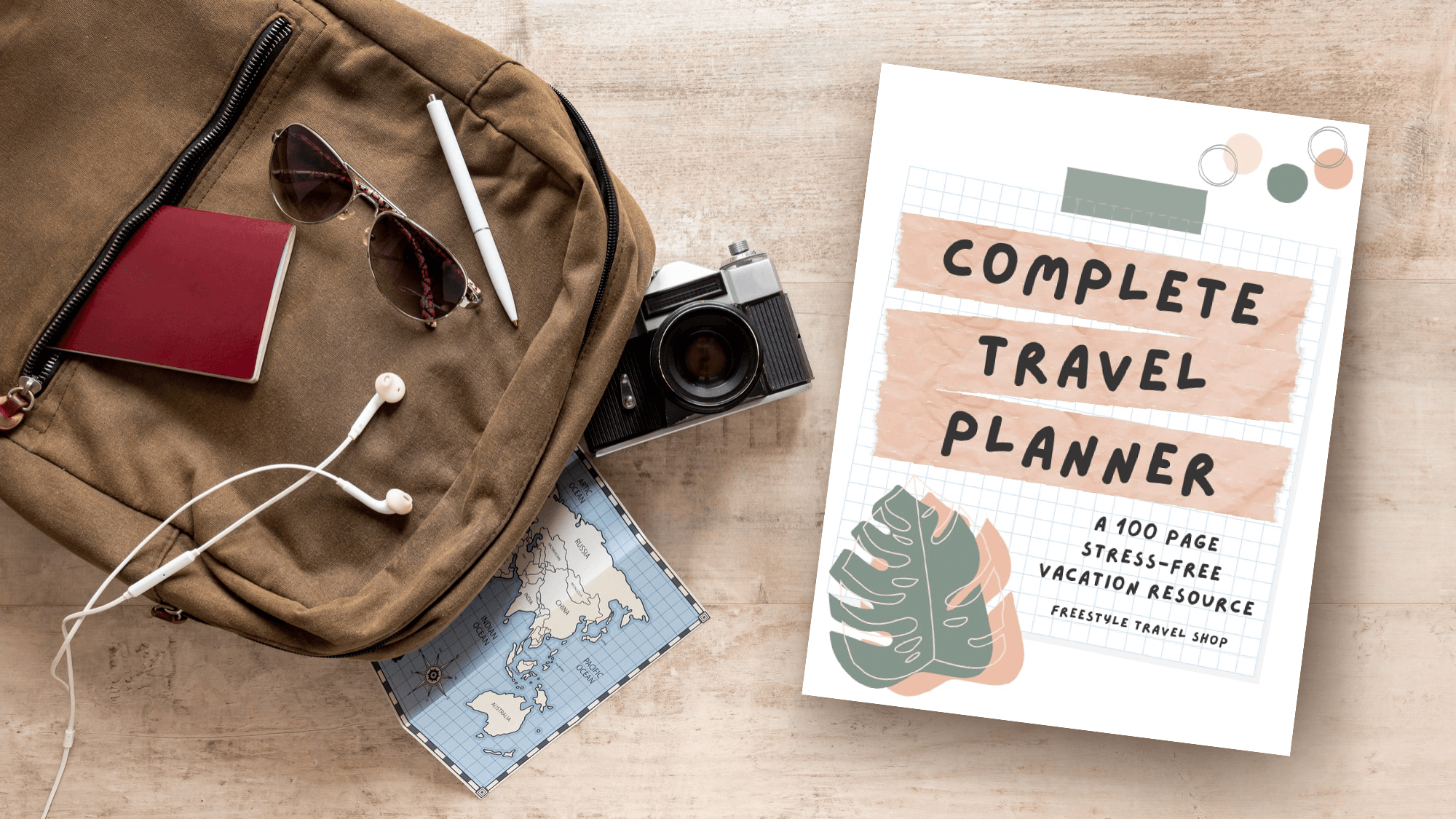
If you'd rather keep everything organized in one place, our Complete Travel Planner Book is designed to help with every stage of vacation planning.
The 100-page travel planner includes fill-in-the-blank templates that can be used for international trips, honeymoons, Disney World vacations, cruises, road trips, family vacations, weekend getaways, and other types of travel.
Instead of keeping hotel research in one app, activity ideas in your notes, your travel budget in a spreadsheet, and your packing list somewhere else, you can organize the major parts of your trip in one planner.
What's Included in the Travel Planner?
Sections include accommodation research, travel budget planning, food and activity research, daily itineraries, weekly itineraries, packing lists, spending trackers, pre-trip checklists, must-do activities, daily recaps, and additional notes.
You can use it from the beginning of the planning process to compare destinations and accommodations, then continue using it during the trip to track spending, reservations, plans, and memories.
For travelers who prefer writing things down rather than keeping everything spread across multiple apps, it provides a simple way to see the entire vacation in one place.
Frequently Asked Questions About Planning a Trip
What Is the First Step in Planning a Trip?
Start by deciding where you want to go, when you can travel, and approximately how much you can spend.
Those three decisions will guide almost everything else.
What Should I Book First for a Vacation?
For most trips, start by researching your major transportation and accommodation options.
Before purchasing nonrefundable flights, make sure suitable accommodations are available for your dates.
Once those are secured, move on to attractions, tours, transportation, and restaurants.
How Do I Make a Travel Itinerary?
Start with a list of the attractions and activities you want to experience.
Save them on a map and group nearby places together.
Build each day around one or two major activities and leave room for meals, transportation, breaks, and spontaneous stops.
How Much Should I Budget for a Trip?
Your travel budget depends on your destination, trip length, transportation, accommodation preferences, dining habits, and planned activities.
Research actual prices for your destination rather than relying on a universal daily budget.
Include a buffer for unexpected expenses.
How Early Should I Book a Vacation?
Popular destinations, holiday trips, cruises, major events, and international vacations often benefit from earlier planning.
Short domestic trips may require much less lead time.
Monitor flight and hotel prices and book when you're comfortable with the total price and cancellation terms.
Should I Plan Every Day of My Vacation?
Create enough structure to avoid wasting time, but don't plan every minute.
Leave free time for meals, delays, rest, shopping, unexpected discoveries, and changes in weather.
What Is the Best Way to Organize Travel Plans?
Some travelers use map apps for saved locations, airline and hotel apps for reservations, spreadsheets for budgeting, and notes for itineraries.
Others prefer keeping everything together in a physical travel planner.
The important part is having a system that allows you to quickly find your itinerary, reservations, tickets, budget, and important information.
Final Tips for Planning the Perfect Trip
Learning how to plan a trip becomes much easier once you follow the same process each time.
Choose your destination and travel dates first. Set a realistic budget. Research flights and accommodations before booking. Map the attractions you want to visit, build a practical itinerary, and reserve the experiences that are most important to you.
Then handle the smaller details: local transportation, restaurants, travel insurance, phone service, documents, packing, and your final pre-trip checklist.
Most importantly, don't try to plan the perfect minute-by-minute vacation. A good travel plan gives you enough organization to avoid unnecessary stress while leaving enough flexibility to enjoy where you are.
Once the major pieces are booked and organized, you can stop worrying about logistics and start looking forward to the trip.